
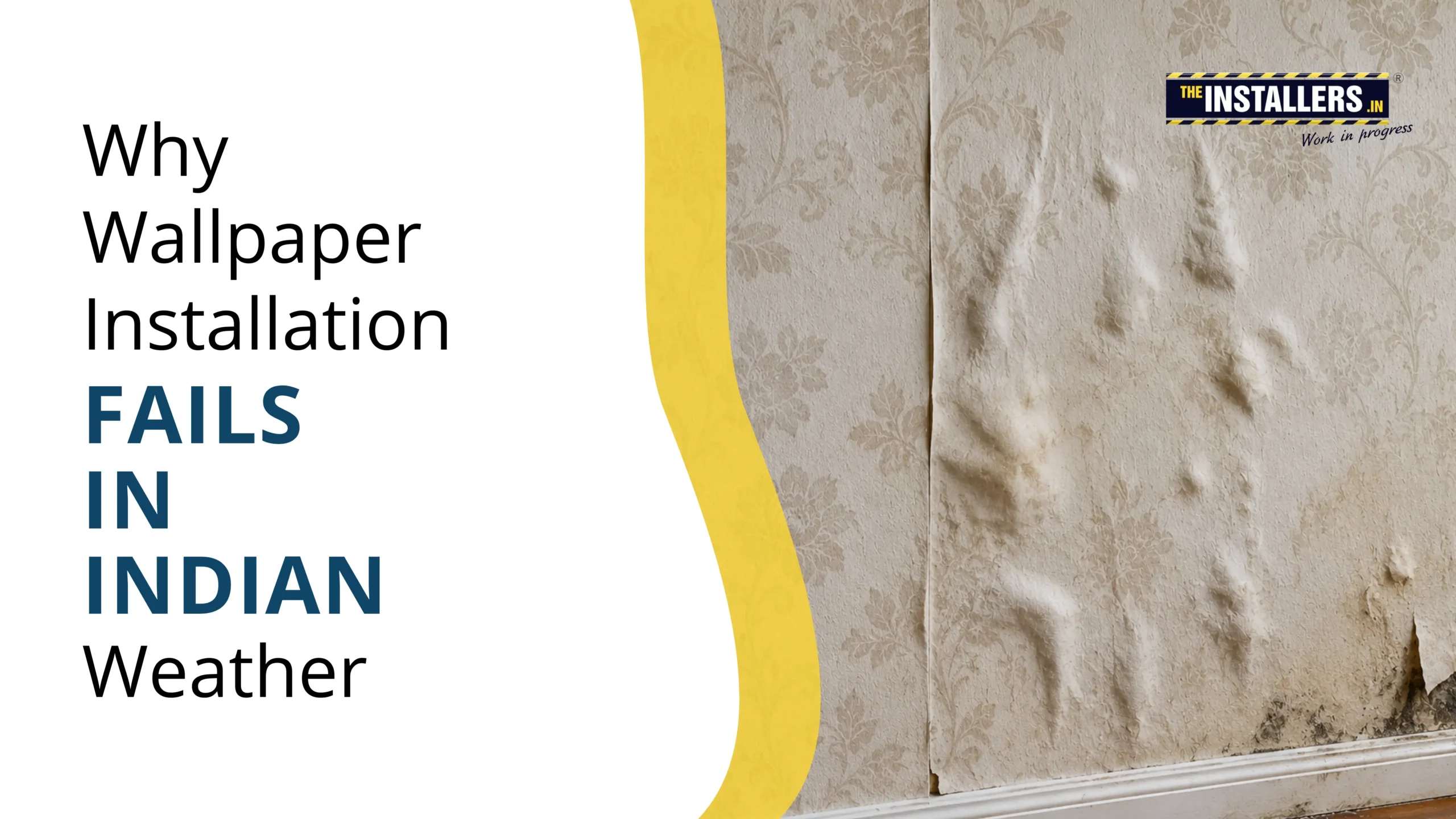

Why Wallpaper Installation Fails in Indian Weather is something most homeowners only understand after the damage becomes visible. In the beginning, everything usually looks perfect. Smooth finish, clean alignment, flawless corners. The wallpaper completely changes the feel of the room.
Then slowly, the problems start appearing.
Corners begin lifting during monsoon season. Bubbles develop underneath the surface. Seams become visible near windows. Adhesives weaken during extreme summer heat.
And most people blame the wallpaper.
But after decades of installation work across Indian homes and apartments, one thing becomes obvious very quickly:
Wallpaper rarely fails because of design or material alone. It usually fails because Indian weather conditions were ignored during installation.
India is one of the toughest environments for wallpaper installation because climate conditions constantly change. Humidity, heat, moisture, ventilation problems, and wall conditions all affect long-term wallpaper performance.
Professional wallpaper installation is not simply decorative work. It is technical work that depends heavily on environmental understanding.
Indian Climate Creates Constant Pressure on Wallpaper Surfaces
Wallpaper performs best in stable indoor environments.
Indian weather is rarely stable.
Depending on the city and season, homes experience:
- High monsoon humidity
- Intense summer temperatures
- Moisture trapped inside walls
- Poor airflow in apartments
- Sudden temperature fluctuations
These conditions directly affect wallpaper adhesives and wall surfaces.
Humidity softens bonding strength. Heat causes expansion and contraction. Damp walls weaken surface grip over time.
Initially, none of these problems are visible.
Then gradually:
- Edges begin curling
- Wallpaper starts separating
- Air pockets form underneath
- Seams become more noticeable
From experience, coastal regions create the fastest wallpaper failures because moisture levels remain consistently high for long periods.
Even premium wallpaper struggles in these conditions if installation is not handled correctly from the start.
Wallpaper installation in India requires understanding climate behavior, not just surface decoration.
That difference matters more than most people realize.
Moisture Is the Biggest Enemy of Wallpaper Installation
Every experienced installer already knows this.
Moisture destroys wallpaper faster than almost anything else.
The biggest problem is that moisture often stays hidden inside the wall long before homeowners notice visible damage.
Walls may appear dry externally while still containing:
- Residual construction moisture
- Exterior seepage
- Dampness from bathrooms
- Monsoon humidity absorption
- Poor waterproofing issues
If wallpaper is installed on such surfaces, failure becomes inevitable.
At first, the wallpaper bonds normally.
Then over time:
- Adhesives weaken internally
- Corners begin lifting
- Bubbling develops underneath
- Stains appear through the wallpaper
In practice, what we consistently see is that wallpaper damage usually begins underneath the surface before becoming visible outside.
By the time peeling starts, the bonding layer has already failed.
No wallpaper can survive permanently on damp walls regardless of how expensive the material is.
That rule has remained true across every wallpaper type and installation method.
[Link to related service/blog]
Poor surface preparation makes weather damage worse.
Weather alone does not destroy wallpaper.
Poor wall preparation combined with harsh weather conditions does.
Professional wallpaper installation always starts with inspecting the wall surface carefully.
Walls must be:
- Fully dry
- Smooth and level
- Free from dust
- Properly primed
- Structurally stable
But rushed installation skips many of these steps because preparation takes time.
Instead of correcting the wall properly, wallpaper gets installed immediately to meet deadlines.
Initially, the result may still look acceptable.
Then Indian weather slowly exposes the shortcuts.
Humidity enters weak areas first. Uneven surfaces create air gaps. Poor priming weakens adhesive performance.
From experience, newly constructed apartments create some of the biggest wallpaper failures because walls often retain hidden moisture long after painting appears complete.
And once wallpaper traps that moisture inside, the damage accelerates quickly.
Good wallpaper installation depends more on the wall underneath than the wallpaper itself.
That is the hidden part most homeowners never see.
Heat and Sunlight Slowly Break Down Wallpaper Adhesives
Most people connect wallpaper failure only with water or humidity.
But heat causes serious problems too.
Indian summers create extreme temperature changes inside homes, especially near windows and poorly ventilated rooms.
Walls expand slightly under heat exposure. Adhesives soften. Wallpaper materials react differently depending on quality and composition.
Over time, this creates:
- Lifting corners near windows
- Weakening seams
- Pattern misalignment
- Surface shrinkage or stretching
Low-quality adhesives fail even faster under these conditions.
In practice, what we consistently see is that rooms receiving direct afternoon sunlight develop wallpaper stress earlier than cooler areas.
This becomes worse when:
- Cheap adhesives are used
- Surfaces are not primed properly
- Installation happens during humid conditions
Temperature movement may appear minor, but wallpaper reacts strongly even to small environmental shifts.
That is why experienced installers select installation methods based on climate conditions, not just wallpaper design.
[Link to authoritative source/stat]
Installation Timing Matters More Than Most People Think
One of the most overlooked reasons wallpaper fails is poor installation timing.
Weather conditions during installation directly affect long-term durability.
For example:
- Installing during heavy humidity weakens adhesive curing
- Installing over freshly painted walls traps moisture
- Installing immediately after civil work increases dust contamination
Professional installers carefully evaluate:
- Wall dryness
- Room ventilation
- Moisture levels
- Surface temperature
- Adhesive curing time
Rushed projects ignore these factors because deadlines become more important than process.
And wallpaper problems usually begin there.
From experience, monsoon-season installations carry the highest risk when surfaces are not tested correctly before installation begins.
Because once wallpaper traps moisture underneath, repairs become extremely difficult.
In many cases, complete removal becomes the only solution.
Cheap Installation Methods Create Expensive Wallpaper Problems
Many wallpaper failures begin with one decision:
choosing fast or low-cost installation instead of proper installation methods.
Different wallpaper materials require different adhesive strengths and preparation techniques.
However, rushed installations often use:
- Generic adhesives
- Minimal surface treatment
- Weak priming systems
- Fast installation shortcuts
At first, homeowners rarely notice anything wrong.
Then after a few months:
- Adhesive strength weakens
- Corners begin curling
- Seams separate gradually
- Wallpaper loses its smooth finish
Even expensive imported wallpaper fails under poor installation conditions.
Professional wallpaper installation protects the investment made in the material itself.
Without proper installation, even premium wallpaper eventually starts failing.
Ventilation Problems in Modern Apartments Increase Wallpaper Failure
Modern apartments are designed for compact layouts and visual appeal.
Unfortunately, ventilation often becomes secondary.
Closed windows, trapped humidity, air conditioning cycles, and low airflow create conditions where moisture remains inside walls longer than expected.
Wallpaper reacts badly to these environments.
Especially in:
- Bedrooms with poor airflow
- Apartments exposed to monsoon humidity
- Rooms connected to bathrooms
- Corners with limited ventilation
In practice, what we consistently see is that wallpaper failure often begins in low-airflow corners first because moisture settles there for longer periods.
Professional installation considers ventilation conditions before recommending wallpaper types or adhesives.
That experience becomes extremely important in Indian homes.
Why Professional Wallpaper Installation Matters in Indian Conditions
Wallpaper installation in India cannot follow the same process used in colder or controlled climates.
Indian weather demands a more careful approach.
At The Installers, we focus heavily on:
- Surface preparation
- Moisture inspection
- Proper wall priming
- Correct adhesive selection
- Climate-aware installation methods
Because wallpaper durability depends far more on preparation and installation quality than most people realise.
Whether it is monsoon humidity, summer heat, or ventilation challenges, long-term performance always begins with proper installation. If you are planning wallpaper installation for your home or commercial space, contact us for a free consultation.
[Link to related service/blog]
Conclusion
Why Wallpaper Installation Fails in Indian Weather usually comes down to environmental conditions being ignored during installation.
Humidity, heat, poor ventilation, and rushed preparation slowly weaken wallpaper long before visible damage appears.
Good wallpaper installation is not simply decorative work. It is technical work that requires understanding how walls, adhesives, and climate conditions interact over time.
After decades in this industry, one lesson continues proving itself true:
Wallpaper does not fail suddenly.
It fails slowly when weather conditions were never properly considered from the beginning.