
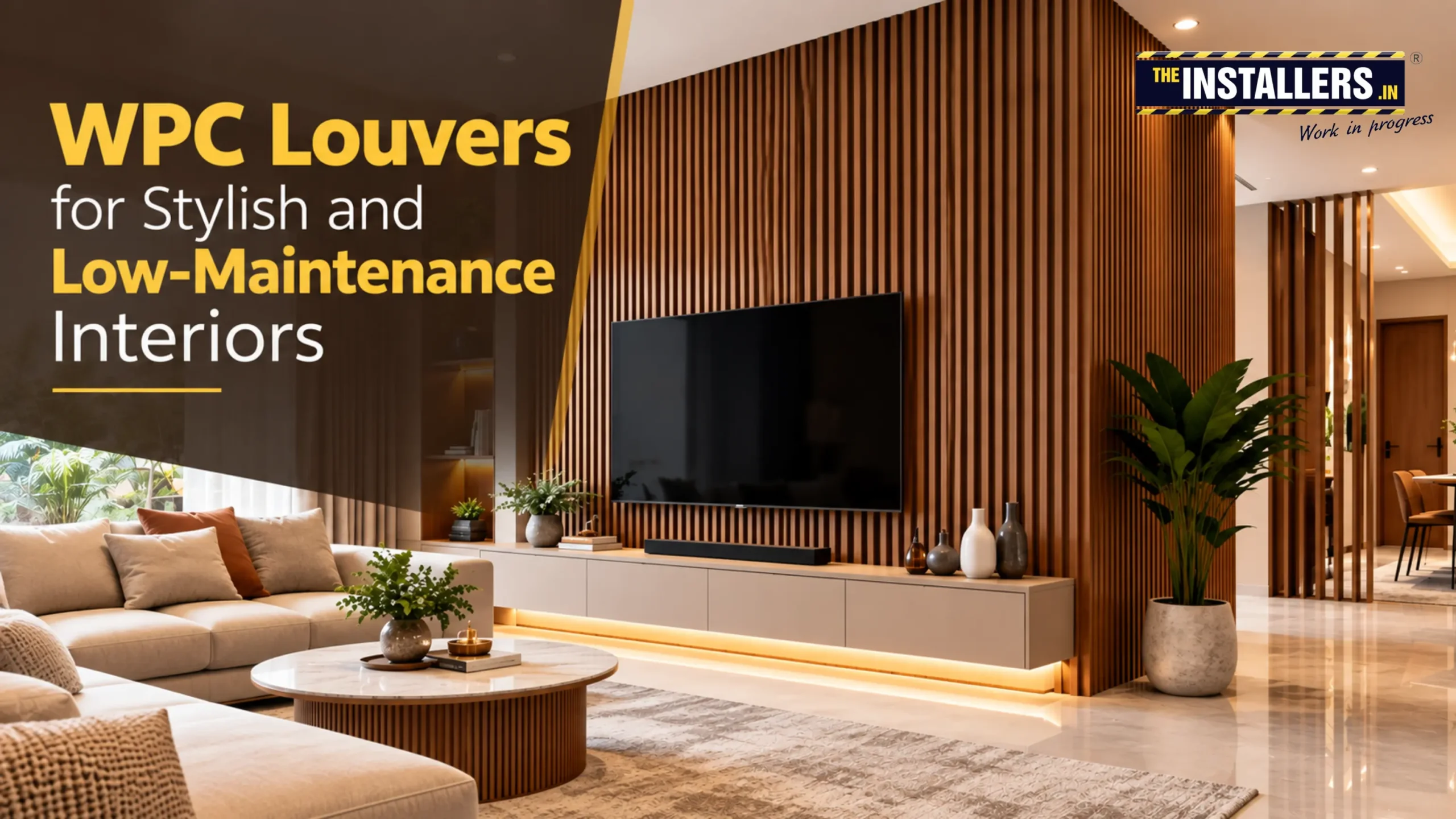

WPC Louvers, or Wood Plastic Composite, is increasingly used for decorative wall applications where homeowners and designers want texture, depth and a contemporary architectural appearance. WPC louvers create repeated lines and shadows across a surface, turning an ordinary wall into a visual feature. They can be used for TV walls, bedroom feature walls, partitions, office interiors, reception areas and other applications depending on the product specification. However, selecting the material is only one part of the process. Accurate measurements, suitable surface preparation, correct fixing methods and precise finishing are equally important.
WPC Louvers Create Texture and Visual Depth
One of the biggest attractions of WPC louvers is the visual depth they create. A conventional painted wall provides a relatively flat surface, while louvers introduce repeated vertical lines, grooves and shadows. The effect can change with natural and artificial lighting. This makes WPC louvers particularly suitable for feature walls where the objective is to create a strong focal point without covering the entire room with decorative elements. The linear design can also complement contemporary furniture, wooden finishes, stone textures and neutral colour palettes.
WPC Wall Panels Combine Design and Practicality
WPC wall panels are engineered decorative surfaces designed to combine a wood-inspired appearance with practical characteristics that vary by product. Depending on the manufacturer’s specifications, WPC products can offer resistance to moisture and termites and can be relatively straightforward to maintain. Product specifications should always be checked before selecting a material for a particular application. This combination of appearance and practical characteristics makes WPC an option for modern Indian interiors.
Fluted Wall Design Adds a Modern Architectural Character
Fluted design adds repetition, rhythm and shadow to flat surfaces. The vertical profile can visually emphasise the height of a wall and create a sense of continuity. Fluted WPC panels can work well behind televisions, beds, reception desks and other focal areas. They can also be combined with stone-look surfaces, painted walls, mirrors or decorative lighting. Using louvers selectively can create a stronger visual hierarchy rather than making every wall equally decorative.
WPC Louvers Work Well for Feature Walls
Feature walls are one of the common applications for decorative louvers. A feature wall introduces a different texture or material without changing the entire room. WPC louvers can be used on TV walls, bedroom headboard walls, living room feature walls, office reception areas, restaurant interiors, retail spaces, corridors and room partitions. The final design depends on wall dimensions, louver profile, colour, lighting and surrounding materials. Electrical points, television brackets, doors and other fixed elements should be considered before installation.
Interior Wall Panels Need Accurate Planning
A good louvered wall starts with planning. Before installation begins, the wall dimensions should be measured carefully. The installer should understand the height, width, corners, openings and obstructions that could affect the layout. Planning also determines where the first panel should begin. The first panel establishes the alignment for the panels that follow, so an error at the beginning can become increasingly visible as the installation progresses.
Surface Preparation Creates the Foundation
Surface preparation is an important stage of WPC louver installation. The wall should be assessed for unevenness, loose material, dust, moisture and other conditions that could affect fixing or alignment. If the wall is suitable for the selected installation method, panels can be installed according to the manufacturer’s recommended fixing system. For uneven surfaces or certain applications, a suitable framework or backing system may be required. Ignoring wall condition can lead to alignment problems and an inconsistent final surface.
Louver Installation Requires Precision
WPC louver installation requires attention to alignment, spacing and fixing. Depending on the product, installation may involve adhesive, clips, screws, a subframe or a combination of fixing methods. The manufacturer’s recommended system should be followed. The first panel needs to be positioned accurately and checked before continuing. Subsequent panels are installed while maintaining consistent spacing and alignment. Professional workmanship can make a noticeable difference to the finished result.
Accurate Measurements Reduce Material Wastage
Measurement is not simply about knowing the total wall area. A professional installer also considers wall height, wall width, corners, doors, windows, electrical points, switchboards, TV brackets, lighting, trims, panel direction and cutting requirements. These details help determine how the panels should be arranged. Accurate measurement can reduce unnecessary cutting and material wastage and can help identify unusual site conditions before installation starts.
WPC Louvers Can Transform TV Walls
TV walls are a popular area for decorative wall treatments. WPC louvers can provide a textured background that adds depth without overwhelming the television. The design can be combined with backlighting, stone-look panels, marble finishes, floating TV units, wooden cabinetry and concealed wiring. Electrical layouts should be planned before installation so that cables and brackets do not interfere with the finished louver pattern.
Bedroom Feature Walls Benefit From Linear Design
WPC louvers can be used behind beds to create a structured bedroom feature wall. The vertical lines can create a sense of height while adding warmth and texture. A louvered section can be combined with a simpler painted or upholstered surface. Soft lighting positioned around or behind the feature can emphasise the grooves and create a more relaxed atmosphere. The design should remain balanced with the bed, side tables, lighting and other furniture.
WPC Louvers Can Help Define Open Spaces
Modern homes and offices often use open layouts. Decorative louvers can sometimes be used as visual partitions to separate areas while maintaining a sense of openness. They can visually distinguish living and dining areas, reception and waiting areas, work and meeting zones, or bedroom and dressing areas. The spacing and orientation of the louvers influence how open or private the partition feels.
Low-Maintenance Design Requires Proper Care
One attraction of WPC is that it can be relatively easy to maintain compared with some traditional decorative materials. Dust can collect within grooves, particularly on deeper louver profiles, so regular cleaning can help maintain the appearance. A soft cloth or cleaning method recommended by the manufacturer can generally be used for routine maintenance. Harsh chemicals or unsuitable cleaning products should be avoided unless approved for the particular finish. Maintenance requirements vary between products, so manufacturer instructions should take priority.
WPC Louvers Need the Right Material for the Right Space
Not every WPC product is automatically suitable for every application. Interior and exterior products can have different specifications. Factors such as moisture exposure, sunlight, temperature changes, fixing requirements and structural conditions should be considered before installation. Choosing a product based only on appearance can create problems later. The material should be selected according to the actual conditions of the project.
Professional Workmanship Improves the Final Finish
WPC louvers can look simple when viewed as individual panels, but once installed across an entire wall, small inaccuracies can become highly visible. A slightly uneven first panel can affect the alignment of the entire wall. Inconsistent spacing can interrupt the rhythm of the design. Poorly finished corners can reduce the premium appearance. Professional installation focuses on these details through measurement, preparation, cutting, fixing and final inspection.
Common WPC Louver Installation Mistakes
Several avoidable mistakes can affect the final result. Installing on an uneven surface can make alignment difficult. Poor first-panel alignment can cause the layout to drift. Ignoring electrical points can result in awkward cuts. Inconsistent spacing can interrupt the visual rhythm. Poor corner finishing can reduce the clean appearance. Choosing a product without checking whether it is suitable for the intended application can also create performance issues.
Choosing the Right WPC Louvers for Your Interior
When selecting WPC louvers, consider panel profile, thickness, width, finish, texture, colour, installation system, intended application, manufacturer specifications and maintenance requirements. It is useful to view a physical sample in the actual room because lighting can change how a colour and texture appear. The final selection should complement existing flooring, furniture, walls and lighting rather than competing with them.
The Installers Approach to WPC Louver Installation
At The Installers, professional installation is treated as an important part of the finished design. The process begins with understanding the site and continues through measurement, planning, preparation, material handling, installation and finishing. For WPC louvers, attention is given to alignment, spacing, cutting, corners and the relationship between the louver pattern and existing elements such as electrical points and furniture. The objective is simple: make the material look the way it was designed to look.
Conclusion
WPC louvers offer a practical way to introduce texture, depth and contemporary character into modern interiors. They can be used for TV walls, bedroom feature walls, partitions, reception areas and other applications where a strong architectural finish is desired. Their visual appeal is only one part of the equation. The quality of the finished result also depends on accurate measurement, suitable surface preparation, correct installation methods and professional finishing. For homeowners, designers and businesses looking for a clean and contemporary wall finish, WPC louvers can be a versatile option when the material and installation process are carefully planned.
WPC Louvers Installation Checklist
- Inspect the wall condition before installation
- Take accurate site measurements
- Plan the louver layout and starting point
- Mark electrical points, corners and openings
- Use the manufacturer’s recommended fixing method
- Maintain consistent alignment and spacing
- Finish exposed edges and corners carefully
- Inspect the completed installation before handover