
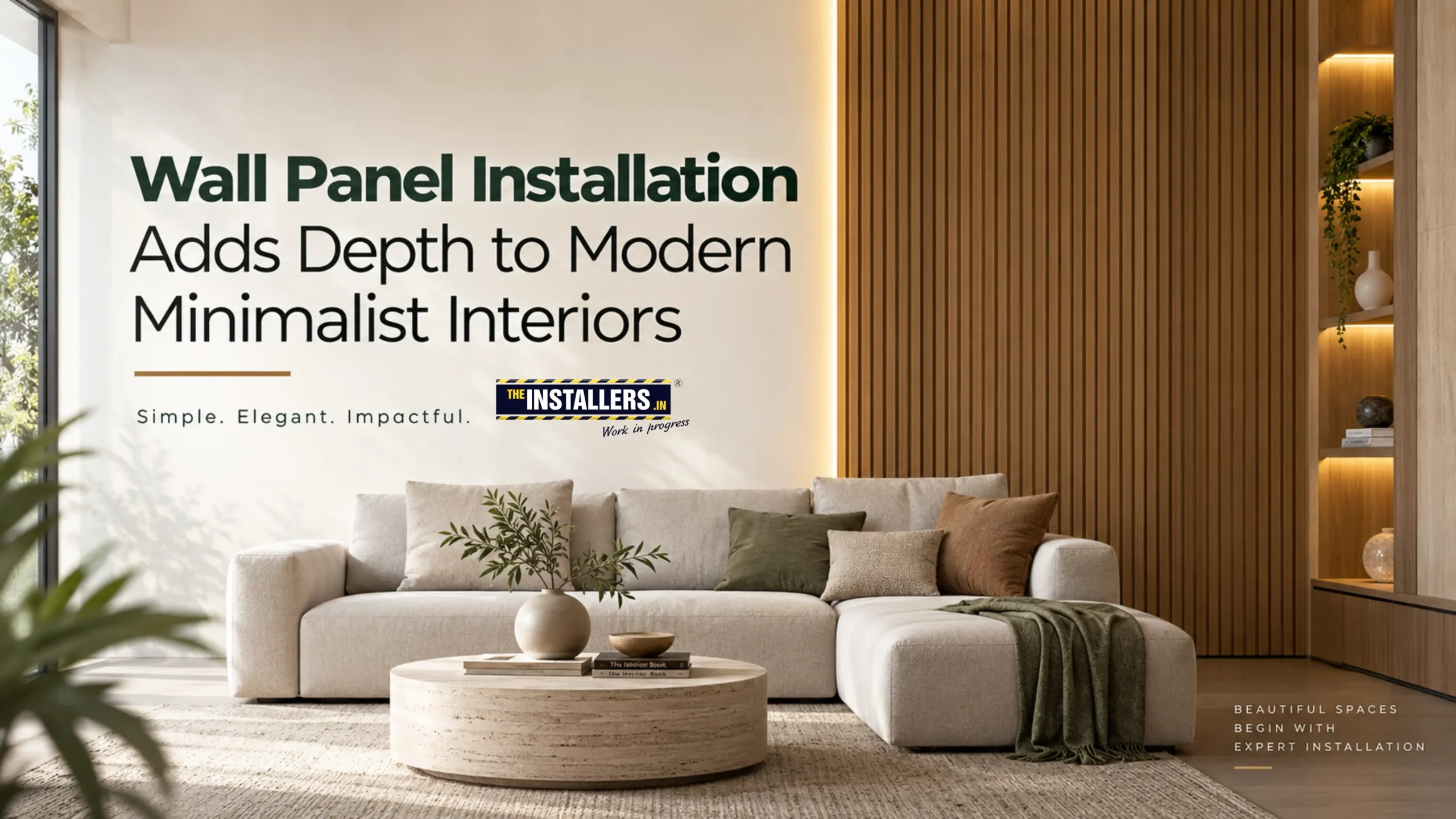

Wall Panel Installation has become an important part of modern interior design because homeowners want spaces that feel clean, sophisticated, and visually interesting without adding unnecessary decoration.
Modern minimalist interiors are built around simplicity, clean lines, open layouts, neutral colours, and carefully selected materials. But minimalism does not mean every wall needs to be completely plain. A well-designed wall panel can introduce depth, texture, warmth, and architectural character while keeping the room uncluttered.
The right wall treatment can change how a room feels. A flat wall can become a focal point, a TV area can look more structured, and a simple bedroom can feel more refined. When the panels are installed with accurate alignment, consistent spacing, clean joints, and proper finishing, the result can look intentional and premium.
For this reason, wall panels are increasingly being used to create feature walls that add personality while respecting the principles of minimalist design.
What Makes Minimalist Interiors Feel Flat?
Minimalist interiors depend on restraint. Instead of filling a room with accessories, the design relies on proportion, materials, furniture, lighting, and colour.
However, when large surfaces have the same flat finish, a room can sometimes feel visually empty. This is especially noticeable in large living rooms, TV walls, bedrooms, and open-plan spaces.
Wall panels provide a simple solution. They introduce a second layer to the surface and create subtle variations in texture and shadow. The room remains clean, but the wall gains more visual interest.
How Wall Panels Add Depth to Modern Minimalist Interiors
Wall panels add depth through a combination of texture, profile, repetition, light, and material contrast. Their effect does not necessarily come from bold colours or complicated patterns. Even a simple linear panel can change the appearance of an entire wall.
Creating Visual Layers
A painted wall normally appears as one continuous surface. Panels introduce another layer and create a sense of dimension.
Fluted, slatted, grooved, or textured profiles can create shadows and highlights across the surface. This makes the wall appear more dynamic without requiring additional artwork or decoration.
In minimalist spaces, this type of visual layering is particularly effective because the material itself becomes the design feature.
Adding Texture Without Clutter
One of the biggest advantages of wall panels is their ability to add character without making the room feel crowded.
Instead of using multiple frames, shelves, accessories, and decorative pieces, a textured wall can provide visual interest on its own. This supports the minimalist approach of using fewer elements while making each element more meaningful.
Using Light and Shadow
Wall panels interact naturally with lighting. Raised profiles and grooves create shadows that change according to the direction and intensity of light.
During the day, natural light can highlight different parts of the wall. In the evening, carefully positioned lighting can emphasise the panel profile and make the surface feel deeper.
This is why lighting should be considered when planning a panelled feature wall. The same panel can produce a completely different effect under different lighting conditions.
Adding Warmth With Wood-Look Finishes
Neutral minimalist interiors can sometimes feel cold when they rely heavily on white, grey, or other flat finishes. Wood-look panels can introduce warmth while keeping the design contemporary.
Warm wood tones can work particularly well with neutral furniture, soft lighting, natural fabrics, and wooden flooring. The goal is not to fill the room with wood but to use it selectively as a visual anchor.
Creating a Focal Point
A feature wall gives the room a clear visual focus. Wall panels can be used behind a television, sofa, bed, dining table, reception desk, or other important area.
By giving one wall more texture than the others, designers can create hierarchy without adding excessive decoration.
Where Wall Panels Work Best
Wall panels are versatile and can be adapted to different rooms and applications. The best location depends on the size of the space, the furniture arrangement, the desired focal point, and the overall interior style.
Living Room Feature Walls
The living room is one of the most common places for wall panels. A panelled TV wall or feature wall can give the room a stronger visual identity.
The panel finish can be coordinated with the sofa, flooring, lighting, cabinetry, and other surfaces to create a cohesive design.
TV Unit Walls
A TV unit can sometimes look disconnected from the rest of the room when it is placed against a completely plain wall. Wall panels can create a structured backdrop that visually connects the TV, storage, and surrounding elements.
Vertical panels can also make a wall appear taller, while carefully planned horizontal lines can create a wider visual impression.
Bedroom Feature Walls
A panelled wall behind the bed can act as a calm architectural backdrop. Subtle textures and warm finishes can add depth without making the bedroom feel overly decorative.
The panel design should work with the bed, side tables, lighting, and other furniture so that the entire composition feels balanced.
Dining Areas
In open-plan homes, a panelled wall can visually define the dining area without creating a physical partition.
A textured wall behind the dining table can establish a clear zone and add character while keeping the overall layout open.
Office and Commercial Spaces
Wall panels can also be used in offices, reception areas, meeting rooms, hospitality spaces, and commercial interiors.
A carefully selected panel design can provide a premium appearance while maintaining a professional and organised environment.
Choosing the Right Wall Panel Design
The most suitable panel is not always the most decorative one. For minimalist interiors, proportion, spacing, colour, and texture should work together.
The panel should support the room rather than compete with the furniture and other finishes.
Consider the Size of the Room
Large patterns and heavy textures can dominate smaller rooms. In compact spaces, simpler profiles and lighter finishes can create depth without making the room feel crowded.
Larger rooms offer more flexibility and can accommodate stronger textures or larger feature walls.
Match the Existing Interior
Wall panels should complement the existing design language. A modern minimalist room usually benefits from clean profiles, controlled patterns, and a limited material palette.
Consider the flooring, furniture, ceiling, lighting, and other wall finishes before selecting the panel.
Choose Colour Carefully
Colour influences how much visual weight a panel carries. Neutral tones can keep the wall subtle, while darker or warmer finishes can make the feature more prominent.
Wood-inspired finishes can add warmth, while solid colours can create a more contemporary appearance.
Think About Panel Direction
The direction of the panel profile can influence the perceived proportions of the room. Vertical lines can emphasise height, while horizontal arrangements can visually widen a surface.
The choice should be based on the wall dimensions and the effect you want to achieve.
Why Professional Wall Panel Installation Matters
A good panel design can lose its impact if the installation is inaccurate. Minimalist interiors depend on clean lines, so even small inconsistencies can become noticeable.
Professional Wall Panel Installation focuses on accurate measurement, alignment, spacing, cutting, joints, corners, and final finishing.
When panels are installed correctly, the repeated pattern appears continuous and intentional. The quality of the installation becomes part of the overall design.
Accurate Measurements
Every wall has its own dimensions, openings, corners, switches, sockets, doors, and other considerations. Accurate measurement helps determine how the panels should be arranged and where cuts will be required.
Good planning also helps reduce unnecessary material wastage.
Consistent Alignment
Linear panels depend on straight and consistent lines. If the starting point is incorrect or the panels gradually move out of alignment, the finished wall can look uneven.
Professional installation pays close attention to positioning so the pattern remains consistent across the entire feature.
Clean Joints and Edges
Joints, corners, and edges are important finishing points. A centre section may look excellent, but poor detailing around the perimeter can affect the overall appearance.
Careful cutting and finishing help the panelled surface look complete and refined.
Combining Wall Panels With Other Materials
Wall panels can be combined with other finishes to create a layered minimalist interior. The key is to keep the material palette controlled.
Wall Panels and Wallpaper
Wallpaper can introduce colour, pattern, or soft texture, while wall panels add physical dimension. Using the two finishes in separate areas can create contrast without overwhelming the room.
A clear visual hierarchy is important so that one finish supports the other rather than competing for attention.
Wall Panels and Flooring
Wooden flooring or wood-look flooring can pair naturally with wall panels. The finishes do not need to be identical.
Using complementary tones and slightly different textures can create a coordinated look without making every surface appear the same.
Wall Panels and Lighting
Lighting can enhance the dimensional effect of a panelled wall. Accent lighting can emphasise grooves and profiles, while softer ambient lighting can create a subtle and relaxing appearance.
Planning lighting and wall treatments together can produce a more cohesive final result.
Common Wall Panel Mistakes to Avoid
Even a premium panel can look less effective when the design or installation is not properly planned.
Using Too Many Textures
Minimalist design depends on balance. Combining multiple strong textures in the same room can make the space feel busy.
It is usually better to select one or two key materials and allow them to create the visual interest.
Paneling Every Wall
A feature wall can often create more impact than covering every wall. Leaving some surfaces visually quiet gives the textured wall more importance.
Ignoring Scale and Proportion
A panel pattern that looks impressive in a large showroom may not work equally well in a compact room. Consider the wall size, ceiling height, furniture scale, and viewing distance before selecting a design.
Choosing Appearance Over Practicality
The panel should suit the environment where it will be installed. Consider the room’s usage, cleaning requirements, moisture exposure where relevant, and maintenance expectations before making a final choice.
Compromising on Installation
Uneven spacing, visible joints, inaccurate cuts, and misaligned profiles can affect the entire appearance. Professional installation is especially important when the desired result is clean and minimalist.
How Wall Panels Increase Perceived Value
The way materials are presented has a strong influence on how a space is perceived. A carefully selected and professionally installed wall treatment can make an interior feel more complete and customised.
Wall panels can create the appearance of an architectural feature without filling the room with decorative objects. Their value comes from the combination of material, proportion, texture, lighting, detailing, and workmanship.
Minimalism Does Not Mean Plain
Minimalism is about thoughtful selection rather than having as little as possible.
A successful minimalist interior may use fewer objects but place greater importance on surfaces, proportions, lighting, furniture, and materials. Wall panels fit naturally into this approach because they can add depth without adding visual clutter.
The Role of Professional Wall Panel Installation
Installation is where the design is translated into the actual space. Professional Wall Panel Installation helps ensure that the selected material delivers the intended visual effect.
At The Installers, attention to measurement, positioning, alignment, cutting, joints, and finishing helps create a clean and refined result.
Whether the project involves a TV wall, bedroom backdrop, office feature wall, or another interior application, precise workmanship can make a significant difference to the finished appearance.
How to Get the Best Result From Your Wall Panels
Start with the overall design rather than selecting the panel in isolation. Consider the room’s existing colours, flooring, furniture, lighting, and architectural elements.
Choose a feature location that naturally attracts attention. Keep the material palette controlled and make sure the panel scale suits the wall.
Most importantly, plan the installation before the material reaches the site. Accurate measurements, surface preparation, layout planning, and professional execution can help prevent avoidable problems.
Final Thoughts
Modern minimalist interiors do not need to be plain to feel calm and sophisticated. Wall panels provide an effective way to introduce depth, texture, warmth, rhythm, and architectural character while maintaining a clean aesthetic.
The strongest results come from thoughtful design and precise execution. The right panel in the right location can transform a flat surface into a feature that changes the character of the entire room.
When premium materials are combined with professional workmanship, even a simple interior can become more refined, functional, and visually memorable.At The Installers, we believe the material creates the possibility, while professional installation brings the design to life.